

Effective leadership, governance key to healthcare success- Kwara commissioner
CHIGOZIE AMADI
The Kwara State Government has said that effective leadership, good governance, and sound management are critical to achieving successful healthcare programmes and improved service delivery for citizens.
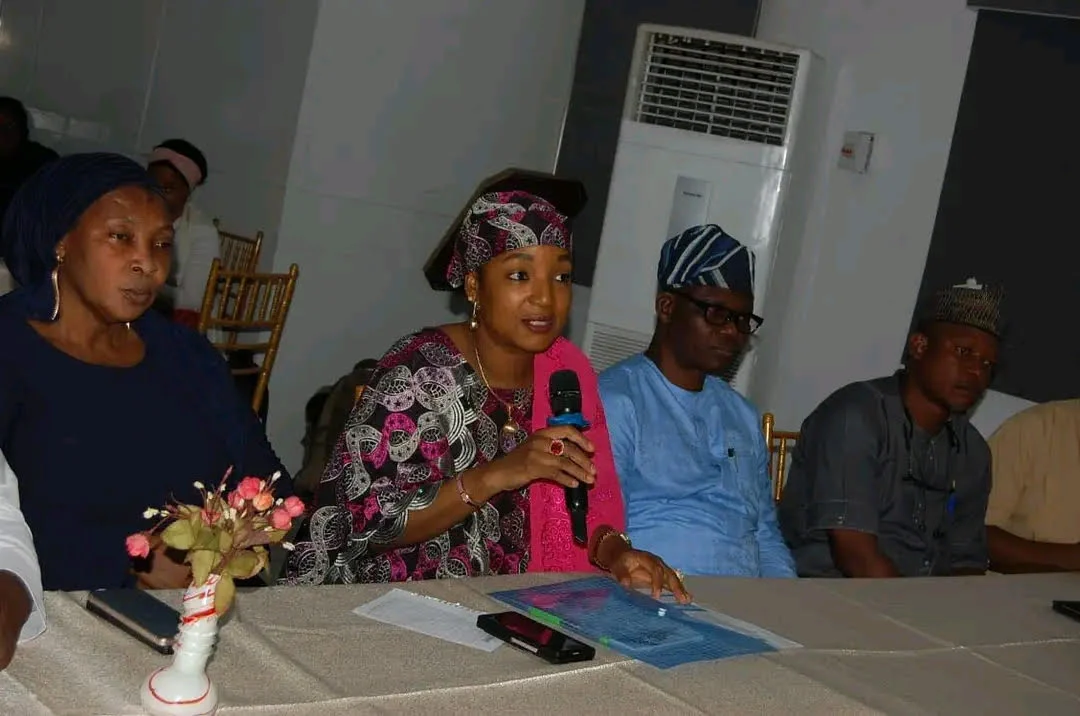
The State Commissioner for Health, Amina El-Imam, stated this during a Stakeholders’ Engagement Workshop on Enhancing Leadership, Governance and Management Capacities in Ilorin.
The disclosure was contained in a statement issued late Wednesday night by the Press Secretary of the Ministry, Saad Hamdalat, and sighted by PUNCH Online in Ilorin.
The workshop was organised by Development Governance International Consult to strengthen institutional and managerial capacity in the health sector.
El-Imam said the rising number and complexity of health programmes across the state require leaders who possess more than professional knowledge.
“The growing number and complexity of health programmes demand leaders who possess not only technical knowledge but also strong managerial and interpersonal skills,” she said.
She explained that coordinating programmes that cut across sectors and communities requires deliberate leadership and structured governance systems.
“Managing multiple programmes across different sectors, stakeholders, and communities requires intentional leadership and coordinated governance structures to ensure that all initiatives work towards a unified goal,” she stated.
The commissioner noted that the workshop was structured as a practical platform to strengthen leadership capacity among programme managers and health stakeholders.
“Everything we learn here should not remain on paper or be stored away after the workshop. The expectation is that these lessons will be immediately implemented in the programmes we currently run so that we can begin to see real improvements,” she added.
El-Imam stressed that effective programme implementation is strongly linked to personal discipline among leaders.
“Effective programme delivery depends significantly on self-management and time management skills. Leaders must first develop personal discipline before they can successfully manage teams, resources, and systems,” she said.
She said self-leadership and emotional intelligence remain critical but are often neglected in governance and administration.
“Self-leadership, self-governance, and emotional intelligence are often overlooked but remain essential qualities that distinguish impactful leaders from those who merely appear busy,” she noted.
The commissioner warned that technical expertise alone cannot guarantee success in governance or programme execution.
“Technical expertise alone is not sufficient to drive meaningful results in governance or programme implementation,” she said.
“Leaders must combine technical competence with soft skills that enable collaboration, strategic thinking, and effective decision-making.”
Using a health-related analogy, El-Imam likened leadership qualities to micronutrients needed by the human body.
“Even small but essential leadership qualities such as effective communication, empathy, and strategic vision can significantly influence programme success,” she explained.
She urged stakeholders to prioritise implementation over repeated deliberations.
“Participants must approach this workshop with a commitment to translating knowledge into action. The ultimate goal is to move beyond repeated workshops and achieve measurable and sustainable results across programmes in the state,” she said.
The commissioner appreciated development partners supporting governance reforms in the sector.
“We appreciate the support of the European Union and Development Governance International Consult for their commitment to strengthening leadership and governance capacity,” she said.
She emphasised that coordinated leadership remains vital to improving healthcare outcomes.
“Strong leadership and coordinated governance are essential to maximising resources, improving programme performance, and ultimately delivering better health outcomes for the people of Kwara State,” El-Imam stated.
In her remarks, the Executive Secretary of the Kwara State Primary Healthcare Development Agency, Nusirat Elelu, described the workshop as timely and impactful.
“We are excited about what we have experienced and look forward to further strengthening leadership capacity to ensure the success of the EU-SARAH Project,” she said.
Elelu commended the state government for sustaining reforms in the health sector, noting that the commitment has attracted support from international partners.
Also speaking, the Chief Executive Officer of DGI Consult, Gafar Alawode, explained that the training was designed to deepen stakeholders’ understanding of the project framework.
He said the workshop would help participants better understand the objectives, scope, methodology, and expected deliverables of the Enhancing Leadership, Governance and Management Capacity stream of the EU-SARAH Project in the state.
