

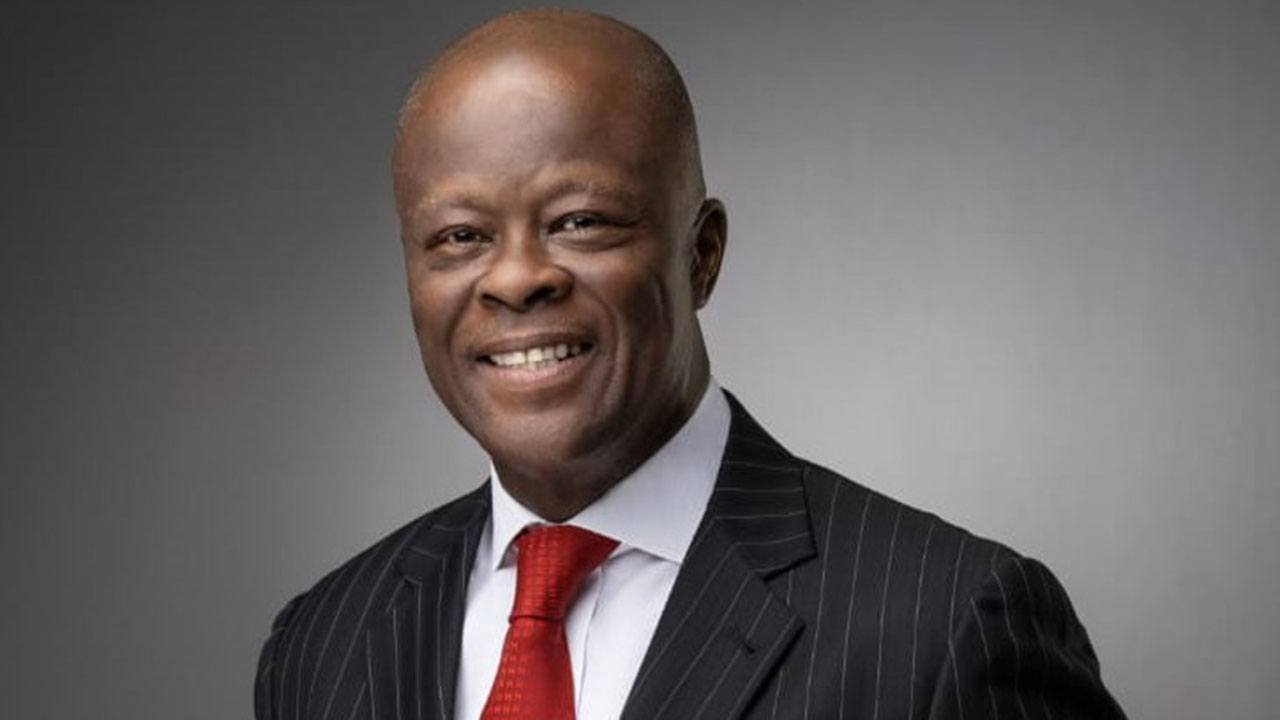
Nigeria faces $14bn annual infrastructure funding shortfall – Edun
CHIGOZIE AMADI
The Minister of Finance and Coordinating Minister for the Economy, Mr Olawale Edun, has disclosed that Nigeria has a $14bn annual infrastructure investment gap, for which it continues to seek both domestic and foreign investment.
Edun stated this on Monday in Lagos when he and the Head of the Islamic Development Bank Group, Mr Anasse Aissami, signed the 2026–2028 partnership agreement at the IsDB Group Day in Nigeria.
Noting the annual $14bn infrastructure gap, Edun said it had become imperative for the government to leverage strategic partnerships to bridge the gap and fast-track development.
According to him, the partnership with the Islamic Development Bank Group will support scalable and transformative projects under the Federal Government’s Renewed Hope Infrastructure Development Fund.
Edun said the collaboration is anchored on large-scale financing of sustainable infrastructure projects in roads, rail, ports, energy, agriculture, and digital infrastructure.
He said, “Our strategic partnership with IsDB is to move our priorities to action through scalable, large-scale, transformative projects and initiatives. We have a very important alignment and partnership with IsDB, and it is anchored on two strategic pillars: sustainable infrastructure for economic transformation.
“We are addressing in Nigeria many estimates, one of which is that there is a $14bn annual infrastructure investment gap, and that is being addressed through initiatives such as the Renewed Hope Infrastructure Fund. There are major highways, ports, and rail projects that are being undertaken.
“With IsDB support, we are advancing energy access, renewable power, transport and logistics mobilisation, agriculture productivity and food security, and digital infrastructure, innovation, automation and creative industries.”
The minister further disclosed that the collaboration with the Islamic Development Bank Group would also support human capital development, including investments in health, education, and social impact programmes.
He said the government remained committed to ensuring that infrastructure development translates into job creation, poverty reduction, and improved living standards for Nigerians.
Edun added that, given Nigeria’s growing population and infrastructure needs, there was an urgent requirement to scale up investments in roads, rail, and ports, while also strengthening social protection systems.
He added that the partnership also aligned with the declaration of 2026 as the Year of Social Development, which focuses on human capital and inclusive development.
He said, “2026 is Nigeria’s Year of Social Development through initiatives such as the World Development Programme aimed at bringing up to 10 million Nigerians into productive economic activities with a strong emphasis on jobs and private sector participation. The reason is that this growth has to be sustainable, inclusive, and rapid. This will be achieved through innovative and ethical financing.
“In Nigeria, 2026 has been declared the Year of Social Development, and through programmes such as the World-Based Development Programme, whereby millions are identified in the 774 local governments and 8,809 wards, individuals involved in small, medium and micro enterprises are to be supported and empowered to be more productive to take advantage of our good land and domestic market to produce more and sell more to the Africa-wide market.
“We continue to lead the way in the use of Sukuk and other Islamic finance instruments, particularly for infrastructure delivery, and we are looking to expand this approach to securitising public assets, leveraging blended finance and de-risking private investment in housing, digital services, and the creative economy. Our objective is to position Nigeria as a leading hub for innovative and Islamic finance in Africa. We are up there in terms of financial capacity and capital market, and we intend to grow on that to take a leading role.”
The minister noted that public financing alone would be insufficient to meet the country’s infrastructure needs, pointing out that the government is shifting towards private sector-led investment and innovative financing models.
He said the government was expanding the use of Islamic finance instruments, including Sukuk, to fund infrastructure, while also exploring asset securitisation and blended finance to attract private capital.
“We are looking at the fact that public financing has its limitations. The government only has so much. In fact, the government is only 10 per cent of the economy; 90 per cent of this economy is the private sector.
“So we need to move from reliance on public to private capital-led growth; from traditional borrowing to innovative financing instruments; from risk exposure to risk sharing and de-risking mechanisms. In simple terms, Nigeria is repositioning itself as a destination for scalable, bankable investment,” Edun added.
Edun added that the partnership also aligns with broader efforts to reposition Nigeria as a leading destination for investment, supported by ongoing economic reforms aimed at stabilising the macroeconomic environment.
He said the reforms, which include the removal of longstanding economic distortions, were beginning to yield results, with inflation showing signs of moderation and investor confidence gradually improving.
He expressed optimism that the partnership would enhance Nigeria’s capacity to mobilise domestic and international resources, boost productivity, and sustain economic growth.
Edun said, “To stabilise the economy, we need to go for rapid, sustained, and inclusive growth. Because of the size of the population and the youthfulness of the population, we need to go faster, and we have engaged with IsDB to say that we need to do larger-scale projects. We have an infrastructure deficit that we must quickly try to make up.
“We need large-scale projects in roads, rail, and ports. In addition, the social sector, including social protection and safety nets, must also be emphasised. So it is not all profit-making business; the health and education sectors are areas we are partnering with IsDB to intervene for the benefit of Nigeria.
“The President has shown that the emphasis on helping the poor and the most vulnerable to cope with the increased cost of living that came with the initial steps taken to correct decades-long distortions that were hurting the economy. Putting in place a social safety net and social protection is part of the Year of Social Development, and that will continue.”
He added, “Under the National Identity Management Commission, over 100 million Nigerians have been given a digital ID. What that means is that they can be reached if you want to. Since you have identified them through their NIN, you can identify them uniquely and biometrically.
“To help them, you can, as is being done, make payments to them digitally, transparently, in a reconcilable manner that people can have confidence in. That is an important part of the social side of helping people and social protection.
“Overall, it is from a growing economy, it is from job creation that you lift people out of poverty. So, the emphasis is shifting from stabilising the economy to encouraging investment and supporting young people who no longer require special permission from everyone to pursue their business ideas, even their business dreams.
“Now, it is a level playing field for micro, small, and medium-scale investors, foreign direct investors, diaspora investors, and Nigerian investors. From that fundamental base, you have partners such as IsDB coming in and helping the efforts to mobilise domestic resources for production.”
Speaking, the IsDB Group Head of Delegation, Anasse, underscored that the bank was committed to promoting economic development, sustainable growth, strengthening resilience, supporting trade and financing solutions, and capacity building in Nigeria.
He also outlined that the partnership aimed to improve road infrastructure, seaports, health, power, and enhance the quality of education in the country.
Anasse further noted that the bank’s portfolio presently covers 21 out of the 36 states, consisting of 148 projects estimated at $2bn in sustainable and inclusive infrastructure, which he said would increase in the coming years.
Anasse said, “The CEF marks a new era of strategic synergy, moving beyond isolated interventions to deliver integrated, federal-scale solutions. We are aligning our institutional resources to support Nigeria’s transition toward a diversified, high-growth economy, one where the private sector serves as the fundamental engine of development.”
He further emphasised that through this partnership, the Group remains dedicated to accelerating the delivery of integrated, transformative solutions that foster national resilience and competitive industrialisation.
The event also featured a panel discussion on Nigeria’s development priorities and the role of the IsDB Group in formulating practical avenues of cooperation and forging strategic partnerships to support Nigeria’s path towards sustainable and inclusive development.
Emphasis was placed on expanding access to finance for SMEs, strengthening public-private partnerships, advancing renewable energy and green infrastructure, and investing in human capital to unlock opportunities for youth and women.
