

As Rabiu, Elumelu align on capital scale, industrial expansion on back of BUA Food’s N1.77trn revenue, N28 dividend
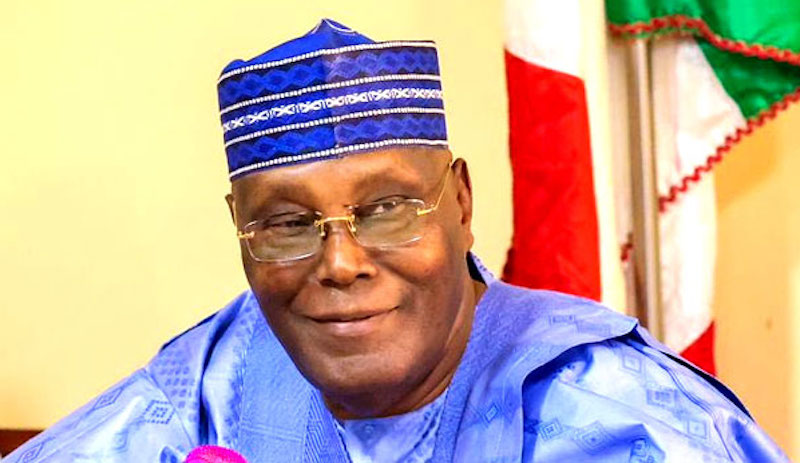
Former Vice President and chieftain of the African Democratic Congress, Atiku Abubakar has expressed deep concern over reports that the Senate approved President Bola Ahmed Tinubu’s request for a fresh $6 billion external loan within a record time—reportedly less than four hours after its presentation.
Atiku, in a statement issued by his Senior Special Assistant on Public Communication, Phrank Shaibu, described the development as not just troubling but alarming.
He noted that a decision of such profound national consequence, one that will further burden an already strained economy and mortgage the future of generations yet unborn, cannot be treated with such reckless urgency.
“What Nigerians have witnessed is not legislative diligence, but a disturbing erosion of oversight responsibility,” he said.
He stressed that the National Assembly is not designed to function as a mere rubber stamp but as a constitutional safeguard meant to interrogate, scrutinise, and protect the interests of the Nigerian people.
The Senate, which ought to serve as a constitutional safeguard, has instead reduced itself to a conveyor belt—processing requests of grave national consequence without due diligence. Borrowing decisions that will bind generations yet unborn cannot, and must not, be treated with this level of casual urgency.
“Where was the debate? Where was the rigorous analysis? Where was the accountability?” Atiku queried.
He warned that approving a multi-billion-dollar borrowing request in record time, without visible scrutiny, raises serious questions about due process and the commitment of the legislature to its constitutional duty.
While these objectives may appear routine on the surface, Atiku warned that they expose deeper structural weaknesses in the nation’s fiscal management.
“Resorting to fresh borrowing to service existing debts, plug budget gaps, and meet routine obligations is not a strategy—it is a dangerous cycle. It reflects a troubling absence of fiscal discipline, clear prioritisation, and sustainable economic planning,” he said.
He further anchored his concerns on emerging fiscal indicators, noting that between January and February 2026, the World Bank reported that Nigeria’s exposure to the International Development Association (IDA) had risen to $18.7 billion—placing the country among the largest recipients of concessional loans globally.
“In March 2026 alone, the President is requesting an additional $6 billion external loan, even as the Debt Management Office continues aggressive domestic borrowing through high-volume bond auctions, as evidenced by the March 2026 FGN Bond Offer Circular, largely to finance immediate government obligations and service existing debt,” he added.
According to Atiku, this pattern reflects an unsustainable borrowing trajectory that places the country on a dangerous fiscal path.
The former Vice President further questioned whether the development signals a deliberate attempt to mortgage the future of the country.
“Because that is what it suggests,” he added.
What does a government that appears to be preparing for electoral rejection in 2027 intend to do with an additional $6 billion in borrowed funds—on top of the mounting obligations it has already accumulated in just the first quarter of 2026?
Atiku emphasised that at a time when Nigeria’s debt profile continues to rise and debt servicing consumes a significant portion of national revenue, prudence—not haste—should guide fiscal decisions.
“Borrowing is not inherently wrong, but reckless borrowing, enabled by legislative complacency, is dangerous,” he said.
He added that the speed of the approval suggests a troubling sense of desperation—one that does not inspire confidence in the long-term economic direction of the country.
“Nigeria is not a private enterprise to be leveraged at will. The future of our nation cannot be signed away in a matter of hours,” he stated.
Atiku called on the Senate to remember its constitutional role as a check on executive excesses, not an extension of it, insisting that Nigerians deserve transparency, accountability, and responsible governance.
He concluded by noting that history will record this moment—and the choices made.
. As Rabiu, Elumelu align on capital scale, industrial expansion on back of BUA Food’s N1.77trn revenue, N28 dividend
However, Nigeria’s industrial and financial heavyweights moved to deepen a partnership that has quietly underpinned decades of enterprise growth, as the Founder and Chairman of BUA Group, Abdul Samad Rabiu, hosted the Chairman of United Bank for Africa, Tony Elumelu and his executive management team at BUA Group’s corporate headquarters in Lagos.
More than a visit, the engagement brought together two institutions whose alignment of capital and industrial capacity has consistently translated into scale, execution, and long-term value creation across Nigeria and Africa’s economy.
At the centre of discussions was a renewed push to expand financing frameworks for large-scale manufacturing, deepen support for domestic production, and unlock the next phase of growth across food, infrastructure, and export-oriented value chains.
Rabiu, reflecting on a relationship that spans nearly three decades, traced its evolution from the early days of Standard Trust Bank to its present form as a mature, trusted partnership with UBA.
“Enduring partnerships are not built on transactions, but on conviction,” Rabiu said. “What we have built with UBA and the Nigerian financial industry over the years is a shared understanding of where Nigeria is going and what it will take to get there. That alignment remains as strong today as it was at the beginning.”
Elumelu underscored the strategic importance of the relationship, positioning it within a broader vision of African-led growth.
“Institutions like BUA Group demonstrate what is possible when long-term capital meets disciplined execution,” Elumelu said. “Our role is to continue enabling that scale, supporting enterprises that are not only growing, but reshaping the Nigerian economy.”
The meeting signals a continued convergence between capital and industry at a time when Nigeria’s growth story is increasingly being driven by indigenous scale, operational depth, positive government action, and sustained investment in real sectors.
In a parallel demonstration of that scale, BUA Foods, a BUA company, has released its audited results for the financial year ended December 31, 2025, delivering revenue of N1.77 trillion, a 16 per cent increase from N1.53 trillion in 2024.
The performance reflects sustained demand across its core segments including sugar, flour, pasta, and rice, alongside continued execution of its expansion strategy.
Gross profit rose to N737.26 billion, up from N540.82 billion, while profit after tax surged by 95 per cent to N518.4 billion, compared to N265.99 billion in the prior year.
Earnings per share increased to N28.80, reinforcing the strength of the Company’s earnings profile.
In line with its commitment to shareholder value, the Board has proposed a dividend of N28 per share, representing a 115 per cent increase from N13 in 2024, with a total proposed payout of N504 billion, subject to shareholder approval.
Cost of sales stood at N1.037 trillion, while total assets grew by 27 per cent to N1.39 trillion, reflecting sustained investment across operations and the broader value chain.
Speaking on the results, the Chairman of BUA Foods, Abdul Samad Rabiu said, “Our 2025 performance reflects a business that is not only growing, but scaling with discipline. We are building capacity, deepening local production, and delivering consistent value to shareholders, all while positioning for the future.”
The Managing Director, Engr. Ayodele Abioye, added; “Our strategy remains to expand capacity, strengthen market presence, and optimise the full supply chain. The demand signals are strong, and we are well positioned to sustain this momentum.”
Taken together, the meeting between BUA Group and UBA, alongside BUA Foods’ record performance, points to a broader shift for Nigeria. Nigeria’s growth is increasingly being shaped by institutions that combine scale, capital discipline, and long-term vision and should be seen as not just an expansion but a consolidation of industrial leadership.
BUA Group is one of Africa’s leading manufacturing, mining, foods, and infrastructure conglomerates with its headquarters in Lagos, Nigeria. Established in 1988 by industrialist Abdul Samad Rabiu, BUA has significant investments in mining and infrastructure, including Cement Manufacturing, Construction, Real Estate, Plaster Production, and Quarrying & Mining.
