

.Grants Tinubu’s additional N9trn request
.Raises oil benchmark to $75 per barrel
CHIGOZIE AMADI
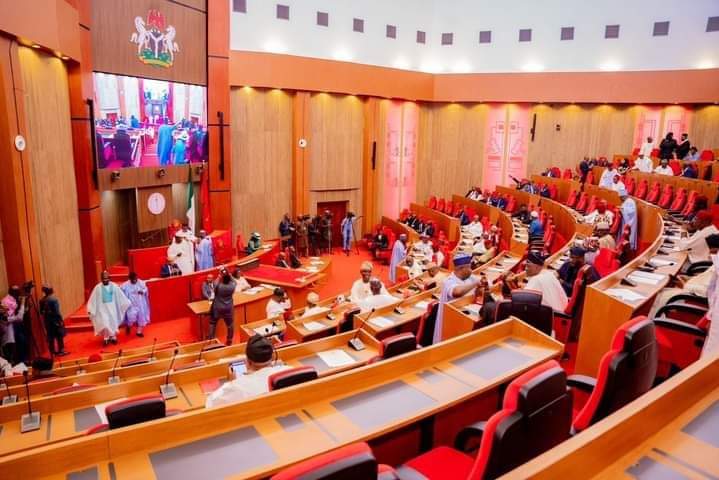
The Senate has approved another extension of the implementation of the capital component of the 2025 budget from March 31 to June 30.
This followed the presentation of a Bill for an Act to Amend the 2025 Appropriation Act to further extend the capital component of the Act from March 31 to June 30.
The bill was sponsored by Senate Leader, Opeyemi Bamidele (APC-Ekiti), at plenary on Tuesday.
Bamidele, while leading debate on the general principles of the bill, said the rationale for the amendment was both compelling and pragmatic.
He said that the execution of capital projects under the 2025 Appropriation Act had not reached an optimal level, despite the release of approximately 30 per cent of allocated funds to ministries departments and agencies (MDAs).
“This situation, if not urgently addressed, risks exacerbating the already troubling incidents of abandoned or partially executed projects across the country,” Bamidele said.
He said it was instructive to note that significant proportion of the projects had relevance, saying only about 70 per cent had been provided for under the 2026 appropriation framework.
He said without the extension, the president’s several critical national infrastructure and development initiatives might suffer avoidable discontinuity.
The lawmaker said that the bill was designed to ensure continuity, enhance budget performance and promote efficient utilisation of already released funds.
“It is also aimed at strengthening fiscal discipline and safeguarding public resources from waste.
“Furthermore, this extension will contribute meaningfully to economic reflation by sustaining capital expenditure flows, conserving jobs and supporting ongoing development efforts across key sectors of the economy,” he said.
The senator said it was imperative to provide MDAs with the necessary legal window to fully implement their projects in the overriding public interest.
He urged the lawmakers to give the bill expeditious and favourable consideration.
Deputy Senate President, Barau Jibrin (APC-Kano), while seconding the motion for approval of the bill, said President Bola Tinubu was determined to bring about enhanced and quick infrastructural development to the country.
“It is in tandem with the “Renewed Hope Agenda” of Mr President to bring about prosperity to our nation, and this cannot be done without building the critical infrastructure needed to bring about this vision to fruition.
“It is this regard that it is very important that time should be given so that the projects that have been started, that are ongoing, can be concluded. Otherwise, we will go into the problem of abandoned projects, which is inimical to our progress.
“It is very necessary, It is known to all that if we don’t do this, it will create a problem to the desire of Mr President to bring about the infrastructure development needed to bring prosperity to our nation,” he said.
Barau urged his colleagues to give expeditious passage to the bill.
The News Agency of Nigeria (NAN) reports that the senate, thereafter, passed the bill, extending the 2025 budget capital component implementation to June 30 after a clause-by-clause consideration.
Also, The Senate at a special plenary on Tuesday, approved President Bola Tinubu’s request to increase the 2026 budget from the initial proposal of N58.472 trillion to ₦68,323,309,818,667 trillion.
The Red Chamber also passed for third and final reading the 2026 Appropriation Bill, which seeks legislative authorisation for total expenditure of ₦68.323 trillion for the 2026 fiscal year.
President Tinubu had presented the initial ₦58.472 trillion budget to a joint session of the National Assembly on December 19, 2025.
The budget focused on consolidating macroeconomic stability, improving the business environment, promoting job-rich growth, and reducing poverty, with defence and security (₦5.41 trillion), infrastructure (₦3.56 trillion), education (₦3.52 trillion), and health (₦2.48 trillion) receiving priority votes.
However, President Tinubu, on Wednesday, sent a request to the Senate seeking an increase to the tune of N9 trillion, a request that was immediately considered and approved by the lawmakers.
Presenting the report of the National Assembly Joint Committee on the 2026 Appropriation Bill during plenary, the Chairman, Senate Committee on Appropriations, Senator Solomon Adeola, told the Chamber that while the Committee was working on the N58.472 trillion earlier proposed in December, 2025, President Tinubu sent communication to the Committee, proposing adjustments to the budget.
“During the consideration of the Bill by the Joint Committee on Appropriations, a communication was received from Mr. President proposing adjustments to the 2026 Budget.
The proposed adjustments were intended to regularise outstanding legacy capital commitments carried over from previous appropriation cycles, thereby ensuring that the 2026 fiscal programme is not unduly burdened by unresolved obligations from earlier years.
The proposals also sought to accommodate a limited number of strategic interventions in the areas of transport, health, and institutional preparedness considered critical to national development and governance continuity, while aligning the financing framework of the 2026 Budget with the revised expenditure profile in a manner that preserves macro-fiscal stability,” he said.
He noted that the adjustment included ₦5.71 trillion in outstanding unfunded capital obligations from the 2025 budget, saying that this was necessary because these obligations were unlikely to be implemented before the 2025 budget expired.
According to him, the outstanding obligations arose from the 2025 Appropriation (Repeal and Enactment) Act, noting that the sum of ₦2 trillion was added for priority projects nationwide that were omitted in the rollover to the 2026 budget.
Also, the strategic national interventions include a Federal Government equity contribution of ₦478.60 billion for the Presidential Legacy Light Rail Projects, which are in Lagos, Kano, Kaduna, and Ogun States.
The interventions also include ₦8.96 billion for feasibility studies for the Calabar-Maiduguri Corridor and the Maiduguri-Sokoto Superhighway.
These projects are under the Tinubu National Beltway Initiative.
An additional US$344.83 million, equivalent to approximately ₦482.76 billion, was proposed for priority health sector interventions.
These interventions are tied to existing bilateral understandings and implementation commitments.
The Committee also pointed out that a further provision of ₦98.50 billion was proposed for the Court of Appeal.
This is in support of the institutional architecture for the 2027 General Election cycle.
The Supreme Court is also proposed to receive ₦36.7 billion. This is also in support of the 2027 General Election cycle.
The Judiciary’s budget ceiling is proposed to be reinstated with ₦268.54 billion. This is to accommodate the prospective appointment of more Justices of the Court of Appeal and Judges.
The total adjustments amount to ₦9.091 trillion, which the funding sources include an increase in the oil benchmark by $10/b, generating ₦2.592 trillion.
According to the Chairman of the Committee, the recent tariff adjustment measures in the telecommunications industry have stimulated renewed investor confidence. Capital inflows and investment commitments exceeding $2 billion have been recorded.
He observed that the telecommunications sector is transitioning from a position of constrained tax yield and underinvestment to one characterised by renewed growth.
The projected revenue contribution from MTN Nigeria and Airtel Nigeria is ₦874 billion.
“MTN Nigeria is expected to contribute ₦724 billion in Corporate Income Tax (CIT) in 2026. Airtel Nigeria is expected to contribute ₦150 billion in CIT in 2026.
The external borrowings are proposed to increase by ₦6.163 trillion. This will support the funding of the adjustments,” he said.
The adjustments are aimed at consolidating macroeconomic stability and promoting job-rich growth. The 2026 budget prioritizes security, infrastructure, education, and health.
After considering the report of the Joint Committee, the Senate approved the adjustments, expressing optimism that the adjustments would stimulate economic growth and improve living standards of citizens.
Meanwhile, Former Vice President and chieftain of the African Democratic Congress, Atiku Abubakar has expressed deep concern over reports that the Senate approved President Bola Ahmed Tinubu’s request for a fresh $6 billion external loan within a record time—reportedly less than four hours after its presentation.
Atiku, in a statement issued by his Senior Special Assistant on Public Communication, Phrank Shaibu, described the development as not just troubling but alarming.
He noted that a decision of such profound national consequence, one that will further burden an already strained economy and mortgage the future of generations yet unborn, cannot be treated with such reckless urgency.
“What Nigerians have witnessed is not legislative diligence, but a disturbing erosion of oversight responsibility,” he said.
He stressed that the National Assembly is not designed to function as a mere rubber stamp but as a constitutional safeguard meant to interrogate, scrutinise, and protect the interests of the Nigerian people.
The Senate, which ought to serve as a constitutional safeguard, has instead reduced itself to a conveyor belt—processing requests of grave national consequence without due diligence. Borrowing decisions that will bind generations yet unborn cannot, and must not, be treated with this level of casual urgency.
“Where was the debate? Where was the rigorous analysis? Where was the accountability?” Atiku queried.
He warned that approving a multi-billion-dollar borrowing request in record time, without visible scrutiny, raises serious questions about due process and the commitment of the legislature to its constitutional duty.
While these objectives may appear routine on the surface, Atiku warned that they expose deeper structural weaknesses in the nation’s fiscal management.
“Resorting to fresh borrowing to service existing debts, plug budget gaps, and meet routine obligations is not a strategy—it is a dangerous cycle. It reflects a troubling absence of fiscal discipline, clear prioritisation, and sustainable economic planning,” he said.
He further anchored his concerns on emerging fiscal indicators, noting that between January and February 2026, the World Bank reported that Nigeria’s exposure to the International Development Association (IDA) had risen to $18.7 billion—placing the country among the largest recipients of concessional loans globally.
“In March 2026 alone, the President is requesting an additional $6 billion external loan, even as the Debt Management Office continues aggressive domestic borrowing through high-volume bond auctions, as evidenced by the March 2026 FGN Bond Offer Circular, largely to finance immediate government obligations and service existing debt,” he added.
According to Atiku, this pattern reflects an unsustainable borrowing trajectory that places the country on a dangerous fiscal path.
The former Vice President further questioned whether the development signals a deliberate attempt to mortgage the future of the country.
“Because that is what it suggests,” he added.
What does a government that appears to be preparing for electoral rejection in 2027 intend to do with an additional $6 billion in borrowed funds—on top of the mounting obligations it has already accumulated in just the first quarter of 2026?
Atiku emphasised that at a time when Nigeria’s debt profile continues to rise and debt servicing consumes a significant portion of national revenue, prudence—not haste—should guide fiscal decisions.
“Borrowing is not inherently wrong, but reckless borrowing, enabled by legislative complacency, is dangerous,” he said.
He added that the speed of the approval suggests a troubling sense of desperation—one that does not inspire confidence in the long-term economic direction of the country.
“Nigeria is not a private enterprise to be leveraged at will. The future of our nation cannot be signed away in a matter of hours,” he stated.
Atiku called on the Senate to remember its constitutional role as a check on executive excesses, not an extension of it, insisting that Nigerians deserve transparency, accountability, and responsible governance.
He concluded by noting that history will record this moment—and the choices made.
