

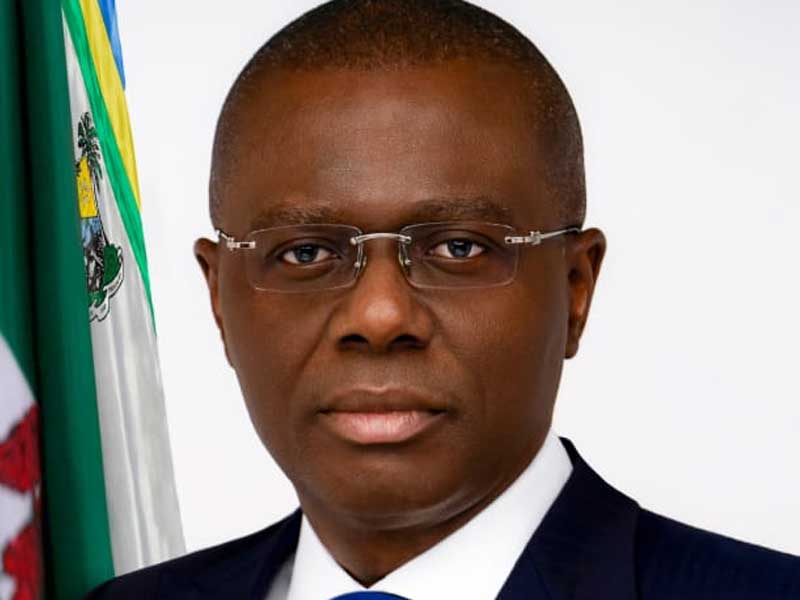
Lagos State Governor, Babajide Sanwo-Olu, says Nigeria’s downstream sector looks very different from three years ago, with Dangote Refinery producing about 42 million litres of petrol a day in August and petrol imports falling by 26 per cent to about 14.6 million litres a day.
The Governor stated this in his opening remarks at the 20th anniversary edition of OTL Africa Downstream Energy Week on Monday, 26th October 2026, at Lagos Oriental Hotel, Victoria Island, represented by the Commissioner for Energy and Mineral Resources, Biodun Ogunleye.
He congratulated OTL Africa on 20 years of putting regulators, investors, operators and policymakers in one room to address Africa’s downstream practical questions, saying Lagos is proud to host the milestone edition.
Sanwo-Olu said when energy becomes expensive or unreliable, damage reaches far beyond the filling station — transport fares rise, factories spend more to produce, food costs more to reach market, and small businesses lose margins first.“That is why energy security is economic security, and why this year’s theme, ‘Secure Energy, Shared Prosperity,’ is the right test for this industry. Supply must be steady, and its benefits must reach the commuter, the trader and the factory owner, not only those who work in the sector,” he said.
On reforms, the Governor said under President Bola Ahmed Tinubu, the Federal Government removed fuel subsidy and opened the market to private investment, noting that for a country that depended on imports for most of its petrol only a few years ago, the Dangote output in Ibeju-Lekki is a real change, according to regulator’s data.“But a refinery’s output is not the final measure of success. The measure is whether product is available where and when Nigerians need it, and what they pay for it.
Energy costs remain high for many households and businesses. We must keep working towards a market that is reliable, competitive and affordable,” he said.Sanwo-Olu said Lagos treats energy as an economic matter and has acted on three fronts.
First is mobility: The Blue Line has carried more than six million passengers since it opened in 2023, the Red Line is running between Agbado and Oyingbo, second phase of Blue Line to Okokomaiko is scheduled for Q1 2027, and the Green Line will link Lekki to Marina — every journey moved from road to rail reduces demand for fuel in traffic.
Second is cleaner fuel for transport: Since start of this year, new buses entering regulated public transport must run on CNG or electricity. The State has converted 152 First and Last Mile buses to CNG, cutting fuel costs by nearly half, and introduced 2,000 CNG-powered trucks under its haulage reform.
Third is electricity: Lagos now regulates its own electricity market through the Lagos State Electricity Law and the Lagos State Electricity Regulatory Commission, with distribution now operating under licences issued by the Commission to ensure better service and room for private investment.“Government cannot do this alone.
The investments that will decide the outcome, in storage, depots, pipelines, distribution and logistics, are largely in the hands of the people in this room,” he told delegates.
The Governor urged the industry to use the week to answer three questions: How to expand storage and distribution so supply is steady in every region? How to finance downstream and gas infrastructure at scale to bring costs down? And how to make sure gains from local refining reach consumers as stable and affordable prices?“Lagos is ready to work with you on each of them,” he said, commending Joyce Akabogu and the OTL Africa team for sustaining the platform for 20 years.
He said Lagos remains committed to responsible investment and partnerships that advance economic development, and looks forward to practical recommendations that will strengthen energy security, stimulate investment, create jobs and reduce cost of doing business.
