

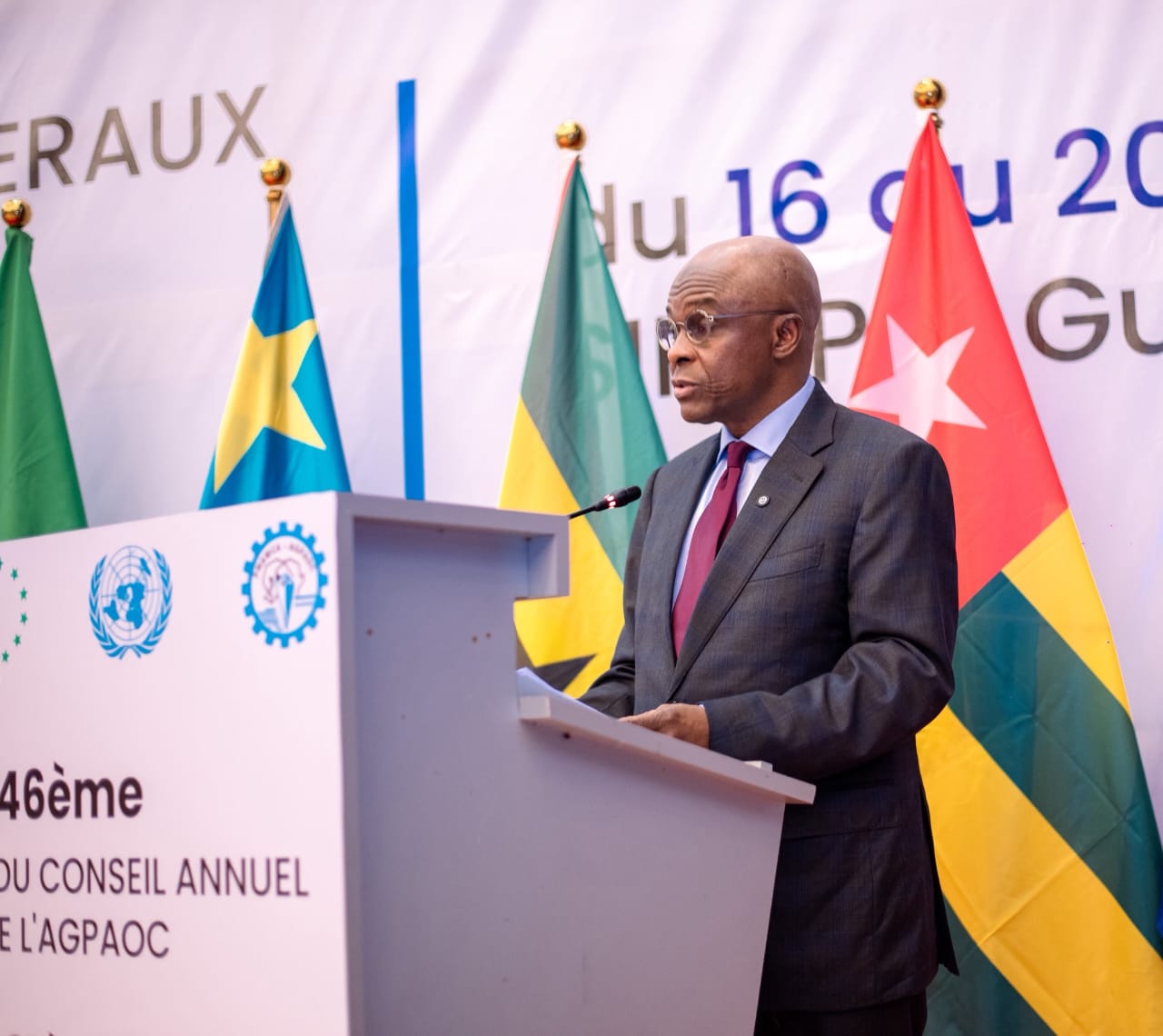
From digitalisation and automation to cybersecurity, regional trade and global partnerships, Dr Abubakar Dantsoho has left an indelible mark on the Port Management Association of West and Central Africa (PMAWCA).
The Managing Director of the Nigerian Ports Authority (NPA) bowed out this week after two years as President and Chairman of Council, a tenure that redefined the role of the regional body.
When Dantsoho was elected on November 21, 2024, at the 44th Annual Council Meeting and 19th Roundtable of Managing Directors — becoming the first Nigerian to lead the association — expectations were high. But few anticipated the scale and speed of the transformation that would follow.
In just two years, he moved PMAWCA from a convening platform to a reform-driven institution — pushing member ports to embrace innovation, improve efficiency, and compete more meaningfully in the global maritime economy.
Interestingly, His tenure, which formally ended at the 46th Annual Council Meeting and 21st Roundtable of Managing Directors in Malabo, Equatorial Guinea, was marked by an ambitious agenda focused on port digitalisation, automation, cybersecurity, regional trade facilitation, infrastructure development and international collaboration.
Beyond providing leadership for the association, Dantsoho sought to reposition PMAWCA as a stronger platform for regional cooperation, encouraging member ports to embrace innovation, improve operational efficiency and connect more meaningfully with the global maritime community.
One of the defining features of Dantsoho’s leadership was his determination to accelerate port digitalisation and automation across West and Central Africa.
Recognising that inefficient documentation, fragmented processes and prolonged cargo clearance procedures remained major obstacles to port competitiveness in the region, he championed the adoption of unified digital standards, Port Community Systems and automated operational processes.
His position was that African ports could not compete effectively in an increasingly technology-driven global shipping industry without embracing digital transformation.
He consistently advocated the integration of port stakeholders, including shipping companies, terminal operators, government agencies, freight forwarders and other service providers, through digital platforms that would improve transparency, enhance efficiency and reduce transaction costs.
Leading by Example at Home
For Dantsoho, regional leadership had to start at home. At the Nigerian Ports Authority (NPA), he pushed through the same reforms he was advocating across West and Central Africa. In 2026, two flagship platforms — the Port Community System and the National Single Window — went live.
Both are designed to cut red tape: streamlining trade documentation, connecting all port stakeholders on one platform, improving transparency, and reducing cargo clearance delays.
For Dantsoho, it was proof of principle. Modern ports, he argued, can no longer rely on cranes and quays alone — technology is now the decisive factor in competitiveness.
Cybersecurity: The Other Side of Digitalisation
His most forceful message at PMAWCA was on cybersecurity. As African ports embrace AI, automation and digital systems, Dantsoho warned they were also exposing themselves to new risks. Speaking in Casablanca, Morocco, he pointed to crippling cyberattacks on South Africa’s Transnet, the Port of Nagoya in Japan, and DP World terminals in Australia — all examples of how a single breach can halt trade and cost millions.“AI can help a port work more intelligently, but cybersecurity protects its ability to work at all,” he said.
As Vice-President for Africa at the International Association of Ports and Harbours (IAPH), he cautioned that as ports, customs, shipping lines and terminal operators become more interconnected, they also become more vulnerable.
“A single window must not become a single point of failure,” he warned. His advocacy helped shift the regional conversation — cybersecurity is now seen not as an IT issue, but as a core part of port modernisation, alongside investment, training, and institutional readiness.
Making AfCFTA Work Through Ports
Trade facilitation was the second pillar of his presidency.Dantsoho argued that the African Continental Free Trade Area (AfCFTA) will only succeed if African ports are efficient, connected and interoperable.Under his leadership, Nigeria’s role as a regional transhipment hub grew sharply.
Transhipment container traffic rose by 83.1% in the first quarter of 2026 — a sign that Nigerian ports are increasingly serving not just Nigeria, but the wider West African market. But he pushed ports to think bigger than containers and oil.
In his handover speech in Malabo, he urged:“Regional ports can no longer function merely as transit corridors for containers and hydrocarbons. They must evolve into dynamic, diversified hubs for sustainable fishing and seafood processing, ship repair and maintenance, cruise tourism, and the production and bunkering of clean marine fuels.
”He also made green transition a competitiveness issue, not just an environmental one:“Transitioning toward the ‘green port’ model is no longer an optional luxury; it is the foundational condition for our future competitiveness and our continued access to international climate and development finance.
”With the International Maritime Organization (IMO) tightening decarbonisation rules, he warned, ports that fail to prepare for the energy transition risk being bypassed by global shipping lines.
Connecting Africa to the World Through IAPH
Perhaps his most lasting institutional legacy is bringing PMAWCA closer to the world. As IAPH Vice-President for Africa, Dantsoho has campaigned for more PMAWCA members to join the 70-year-old global body, which represents over 190 ports and 167 port-related businesses handling more than 60% of world seaborne trade.
For him, it is not about membership for its own sake. It is about giving African ports a seat at the table where global rules on digitalisation, security, sustainability and energy transition are being written — and access to networks, technical cooperation and best practice.
His four priorities at IAPH — policy implementation, regional collaboration, institutional cooperation and trade facilitation — reflect the same agenda he drove at PMAWCA.
From Regional Vision to National ReformThat international vision is now being translated into domestic reform at the NPA.
Beyond Lagos, rehabilitation work is advancing in Port Harcourt, Onne, Warri and Calabar to decongest the system and spread growth. The long-awaited reconstruction of Apapa and Tin Can Island — Nigeria’s busiest gateways — is also in the pipeline to fix infrastructure gaps and boost cargo-handling capacity.
The goal: make Nigeria more competitive, attract private capital, and anchor its position as West Africa’s maritime hub, while growing non-oil exports.
Beyond Two Years
Dantsoho’s presidency will not be remembered for the title he held, but for the agenda he set. Digitalisation, cybersecurity, trade, green ports, and global integration — he reframed what a West and Central African port should be in the 21st century.
His tenure at PMAWCA has ended, but his work has not. As NPA Managing Director and IAPH Vice-President for Africa, he remains at the centre of the continent’s maritime transformation.
For Nigeria, his emergence as the first Nigerian to lead PMAWCA and his rise at IAPH are diplomatic milestones.For West and Central Africa, the true test of his legacy will be whether the reforms he championed become permanent — delivering ports that are more efficient, more secure, more sustainable, and more globally connected.
