

*INEC begins broad review of party regulations to safeguard election integrity
*Abbas explains why NASS included electronic, manual transmissions in Electoral Act
*ADC opens free online membership registration nationwide
CHIGOZIE AMADI
Independent National Electoral Commission (INEC) has assured Nigerians that the technical glitches experienced during the 2023 presidential election would not reoccur in 2027.
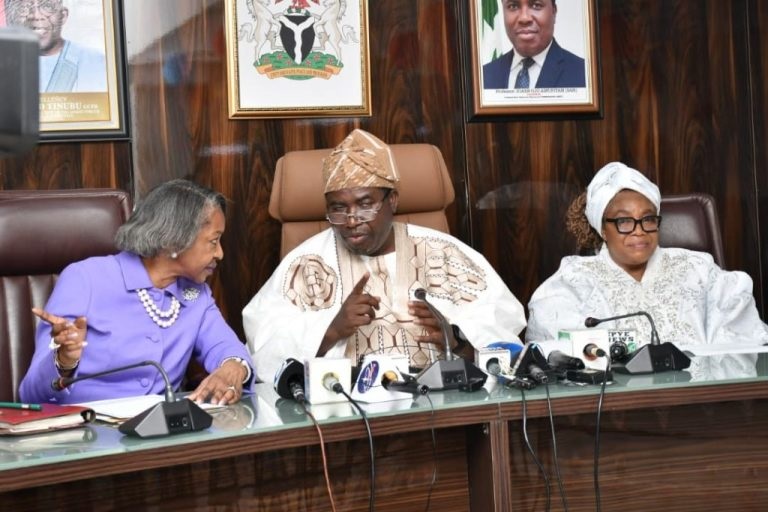
INEC Chairman, Professor Joash Amupitan, gave the assurances yesterday in Abuja at the Citizens’ Townhall on the Electoral Act 2026.
Amupitan said next year’s general election would be the best in the history of the country.
The electoral body had on Friday announced that the presidential and National Assembly elections would hold on Saturday, January 16, 2027, while the governorship and state Houses of Assembly Elections would now hold on Saturday, February 6, 2027.
The commission had earlier fixed the presidential and National Assembly elections for February 20, 2027, and the governorship and state Houses of Assembly elections for March 6, 2027, before it changed the dates in line with the 2026 Electoral Act.
The change in the timetable and schedule of activities for the 2027 general election became imperative following President Bola Tinubu’s assent to the Electoral Act amendment bill recently passed by the National Assembly.
Section 60(3), which guarantees electronic transmission of results, had been the bone of contention since the 2026 Electoral Act came into effect
It was against this background that opposition parties called for an immediate amendment to the Electoral Act 2026, describing it as anti-democratic and skewed ahead of the 2027 elections.
But speaking at the town hall meeting, Amupitan revealed that as part of efforts to test its result-transmission infrastructure and prevent a repeat of past technical setbacks, the commission would conduct a mock presidential exercise ahead of the 2027 general election.
He stated, “Election anywhere in the world is now about technology, but before deploying any technology, it is important to test it thoroughly
“So, my own audit of the 2023 election, while the BVAS was tested within the states for the Osun election, Ekiti election, however, when it came to the federal election, especially the presidential election, which became inter-state, it was not properly tested.”
Amupitan said, “One of the things we are trying to do before the election is to have a mock presidential election, so that we are sure that this transmission across the state must not fail.
“The glitch is eliminated. By God’s grace, it will not surface in Nigeria. By the grace of God, the 2027 election will be the best Nigeria has ever had. The electorate of 2027 is more aware and understands the direct correlation between elections and national development.
“We want a process that guarantees the legitimacy and confidence people want to see in their system. When people trust INEC and their leaders, the country will move forward.”
Amupitan acknowledged that while perfection might be difficult to attain, the commission was working to deliver significant improvements.
According to him, “We will try to give Nigerians a near-perfect election. Credible elections remain the lifeblood of democracy.”
The INEC chairman identified logistics and result management as critical operational challenges facing the commission.
He stated, “So, result management and logistics are two basic issues that, from our own end, we’re trying to see how best we’re able to manage them very well, so as to enhance the transparency and credibility of the system.”
Amupitan explained that network availability — rather than the concept of electronic transmission itself — remained the major hurdle.
INEC Begins Broad Review of Party Regulations to Safeguard Election Integrity
INEC commenced a comprehensive technical review of its Regulations and Guidelines for political parties to align them with the recently assented Electoral Act 2026 and emerging electoral realities.
The exercise, convened under Amupitan, represented a critical phase in the comission’s ongoing reform agenda aimed at strengthening political party oversight, improving compliance culture, reducing pre-election disputes, and enhancing public confidence in Nigeria’s democratic process.
The electoral body said aligning party regulations early with the Electoral Act 2026 would significantly reduce pre-election litigation and administrative disputes that often diverted attention from election preparation and delivery.
Chief Press Secretary to the INEC chairman, Adedayo Oketola, in a statement, yesterday, said the Technical Workshop on the Revision of the INEC Regulations and Guidelines for political parties would bring together National Commissioners and Directors across operational departments, legal experts, election administrators, and institutional stakeholders to undertake a detailed clause-by-clause review of the existing 2022 framework.
Oketola stated, “The recently enacted Electoral Act 2026 introduces significant legal and operational changes affecting political party administration, candidate nomination processes, compliance obligations, dispute resolution mechanisms, and the Commission’s regulatory mandate.
“Consequently, INEC is reviewing its subsidiary regulations to ensure full legal alignment and operational clarity well ahead of the next electoral cycle.”
He said, “Beyond legal compliance, the commission is drawing lessons from previous elections to strengthen preventive regulation.
“Persistent challenges such as opaque party primaries, membership disputes, weak financial disclosure practices, and exclusionary participation patterns have contributed to avoidable litigation and electoral uncertainty. Addressing these gaps early remains central to the commission’s preparations for 2027.”
Amupitan stressed that to support evidence-based reforms, INEC was mainstreaming findings from the Political Party Performance Index (PPPI), a diagnostic assessment tool that identifies systemic weaknesses in party governance and compliance practices across the country.
He explained that the objective was to move regulatory oversight from reactive enforcement to proactive supervision anchored on measurable standards.
On the reform process, the INEC chairman emphasised that credible elections usually began long before polling day.
He added, “For elections to inspire public confidence, the institutions that produce candidates must themselves operate transparently and within the law.”
Technical facilitation support for aspects of the process was provided by Westminster Foundation for Democracy (WFD), alongside Nigerian legal and electoral experts, contributing comparative technical insights in support of the commission’s institutional reform objectives.
Commenting on the engagement, Country Director of WFD Nigeria, Adebowale Olorunmola, stated that the commission’s initiative represented a significant step towards strengthening political party regulation ahead of the 2027 general election cycle.
Olorunmola stated, “This isn’t just a review of a document; it is a reconstruction of the democratic foundation. We are moving towards an era where political parties are held to the same high standards of integrity as the electoral commission itself.”
Olorunmola emphasised that anchoring regulatory reforms on empirical evidence, including insights from the Political Party Performance Index (PPPI), would support INEC to deepen compliance, reduce avoidable electoral disputes, and promote greater transparency, inclusivity, and internal democracy within political parties.
Abbas: Why National Assembly Included both Electronic, Manual Transmissions in Act
Speaker of the House of Representatives, Hon. Abbas Tajudeen, said the National Assembly included both electronic and manual transmissions of results in the amended Electoral Act to avoid disenfranchising the Nigerian electorate and prevent voter apathy during the 2027 general election.
Abbas stated that due to inadequate internet penetration in the country, it would be counterproductive to allow only one—electronic—form of results transmission in the Electoral Act.
He spoke when he hosted the Ambassador of Spain in Nigeria, Ambassador Felix Costales, during a courtesy call at the weekend at his office in Abuja.
Abbas received the Spanish ambassador in the company of Chairman, House Committee on Appropriations, Hon. Abubakar Bichi; Chairman, Committee on Foreign Affairs, Hon. Wole Oke; and Chairman, Nigeria-China Parliamentary Friendship Group, Hon. Jafaru Yakubu.
Abbas, in a statement by his Special Adviser on Media and Publicity, Musa Krishi, said based on his interaction with the chairman of INEC, the 2027 general election “will be more transparent, accommodating, and inclusive”.
On the Electoral Act, the speaker said, “As you said, sometimes people scream far beyond the exact level of the issue. A lot of people think that we need to embrace electronic transmission real-time in Nigeria, but within the very little period that you’ve been in Nigeria, you should be able to speak on the quality of our internet network.
“You should know that even in advanced cities like Abuja, you are not guaranteed stable internet services all the time. Based on the NCC report, they said Nigeria is still underserved by almost 40 per cent, which means 40 per cent of territories at large in Nigeria are not covered by the internet.”
He explained, “Now, tell me, for those who are saying we should go ahead and do that, already if you look at the number of our registered voters in this country, it is alarming.
“It is sad to say that even with the manual arrangement we are using, we are only able to capture about 12-15 per cent of registered voters who, after every four years, come to vote. That’s voter apathy. Very few people go out to vote.
“Now, if we are to introduce (only) the electronic system, it will further reduce the number because 40 per cent of the country will probably not be able to vote as they don’t have adequate internet services.
“It means what we should be expecting is not only disenfranchising the voters—denying some people the right to vote—we will also record, perhaps, the lowest number of voters in the next elections.”
Abbas said, “These are all avoidable. That is why we said, in our wisdom, the Electoral Act should be hybrid—a combination of both the manual and electronic systems.
“Where it is feasible to use the electronic, use the electronic transmission; where it is not possible, use the manual, because there is no way one form, particularly the electronic, can be used entirely in all parts of the country for the elections.”
Abbas explained that members of the opposition, who rose against the inclusion of both electronic and manual transmission of results, knew the true situation of the inadequacy of internet services in the country.
He claimed, “The opposition, even though they know the truth—they are Nigerians, they live in Nigeria, they travel all over Nigeria—they know that the level of internet penetration in Nigeria is inadequate.
“There is no way you will be able to have transparent elections using an inadequate system, and through our energy crisis in the country as well, we do not have enough electricity.”
He stated, “The internet is always backed by energy; how do you power the entire country on the day of election to have phones that are working and internet that is working, backed by adequate electricity? All those are challenges that, for now, will not be able to provide us the opportunity to do transmission real time online.”
Earlier, Contales said his visit was to seek the understanding of the Nigerian legislature to deepen bilateral relations between the two countries, especially in the area of legislative diplomacy.
He said Spain would follow the 2027 elections closely, assuring, “You can count on us—whatever we can do to deepen Nigerian democracy. Yes, there may be challenges, but you can count on us in any way possible.”
He stated, “I know it is a busy time for the parliament with the approval of a new Electoral Act. I wanted to come and visit you before then.
“We have the elections here already. Because of the importance of your country, we want to deepen parliamentary diplomacy with Nigeria. It is not yet as developed as we have with other nations, but it is something we should try and welcome in the future, maybe after the elections.”
Contales added, “Of course we are going to follow closely the electoral period ahead of us. It is a long period; elections are always big times; opinions are always polarized. Sometimes when you dig down, you realize that the issues are not that big, or not as big as they seem in the public discourse.”
Ondo APC Expresses Confidence in Revised INEC Timetable, Dismisses ADC Allegation
APC, Ondo State Chapter, expressed confidence in the revised 2027 election timetable released by INEC, describing it as realistic, structured, and fair to all political parties.
Speaking with journalists at the weekend in Akure, State Director of Media and Publicity, Steve Otaloro, stated that the timetable reflected administrative foresight and institutional balance.
According to him, “The requirement for digital membership registers is a progressive reform. It enhances transparency, strengthens institutional discipline, and deepens internal democracy within political parties. By reducing disputes associated with manipulated registers, it ultimately reinforces the credibility of party primaries.”
Otaloro emphasised that the timelines were released well in advance of the 2027 election cycle, providing sufficient opportunity for all serious political parties to comply with regulatory requirements.
He said, “Properly structured political organisations should not encounter difficulty maintaining updated membership databases or conducting orderly primaries. These are foundational responsibilities of any credible political party.
“APC welcomes reforms that promote electoral integrity and accountability.”
Addressing allegations by African Democratic Congress (ADC) that the new timetable was designed to favour Tinubu and APC, dismissed the claim as speculative and without evidentiary foundation.
He alleged, “INEC operates within clearly defined constitutional parameters. Its scheduling decisions are administrative and legal determinations — not partisan instruments.
“Politicising procedural timelines only undermines public confidence in democratic institutions.”
Otaloro stressed that Tinubu did not require institutional manipulation to secure electoral victory in 2027, stating that governance performance remains the ultimate determinant in any democracy.
He stated, “The president’s record speaks for itself. The ongoing reforms in Nigeria’s financial architecture, energy sector, and infrastructural development are repositioning the country toward efficiency, fiscal discipline, and alignment with global best practices. Structural reforms aimed at long-term economic stability are already producing measurable outcomes across key sectors.”
He highlighted macroeconomic restructuring, revenue optimisation, energy sector recalibration, and institutional reforms as substantive achievements that would naturally influence voter decisions.
According to him, “Elections are determined by performance credibility, not conspiracy narratives. If Nigerians are to consolidate and permanently benefit from the gains of these reforms, policy continuity is essential.
“A second term will guarantee stability, deepen structural corrections, and allow reform cycles to mature fully.”
To ensure a level playing field ahead of 2027, APC called on all political parties to respect INEC’s constitutional independence, comply fully with electoral regulations, strengthen internal democratic processes, and present policy alternatives rather than propagate unfounded allegations.
The party added that a transparent electoral process combined with verifiable governance performance would decisively shape the 2027 electoral outcome in favour of the party.
ADC Opens Free Online Membership Registration Nationwide
ADC announced the commencement of free online membership registration nationwide, building on the momentum of its membership registration and revalidation exercise launched last month.
In a statement by its National Publicity Secretary, Mallam Bolaji Abdullahi, the party said the new digital platform, available at www.adcregistration.ng, was crucial to the party’s presentation for the 2027 general election as well as its various congresses and conventions.
ADC stated that the manual registration would continue simultaneously across the country, adding that this followed the successful kick-off of its nationwide registration and revalidation in Abuja last month.
Abdullahi said the new digital registration platform was designed to enable the party meet the requirements of the new Electoral Act 2026 regarding digital membership register.
He said only individuals whose membership details were fully captured and verified in the party’s official digital register would be eligible to vote or be voted for in the party’s primaries.
The statement said, ”Since the launch of the physical and grassroots membership exercise in February, we have recorded strong interest from Nigerians across states and the diaspora.
”Apart from meeting legal requirements, introduction of the free online option is designed to remove barriers to entry, simplify enrolment, and ensure that every eligible Nigerian who wishes to identify with the ADC can do so seamlessly and securely.”
Abdullahi said, ”Members who have registered on the party’s previous platform are also required to revalidate their membership on the new digital portal, as additional mandatory information is now required to ensure full compliance with the Electoral Act and INEC guidelines.
”Support groups, and associations are also encouraged to take advantage of this window by registering at www.adcregistration.ng and completing the simple onboarding process.”
He stated, ”ADC will like to emphasise that this exercise is without prejudice to our firm objections to the provisions of the Electoral Act 2026 that give undue advantage to the ruling party as well as the consequential INEC timetable.
”African Democratic Congress remains committed to building a modern, inclusive, and citizen-driven political movement capable of delivering credible leadership and a better Nigeria that works for all.”
