



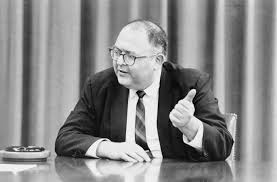
Kahn’s Nuclear War Theory faces fresh scrutiny over built-in contradictions
CHIGOZIE AMADI
Herman Kahn, one of the most influential nuclear strategists of the Cold War era, is back at the centre of academic debate as scholars revisit his controversial views on the feasibility of fighting and surviving a nuclear war.
Kahn, a prominent thinker at the RAND Corporation, rejected the popular belief that nuclear conflict was simply “unthinkable.”
Instead, he argued that policymakers must prepare for the possibility of nuclear war by analysing how it could start, escalate or be contained.
His theories were rooted in what he called a “realistic approach.” He urged world leaders to “think the unthinkable” by examining a spectrum of nuclear conflict scenarios—from limited tactical exchanges to full-scale strikes on cities.
This thinking led to his well-known Escalation Ladder, a step-by-step model outlining how tensions could rise from conventional confrontation to nuclear catastrophe.
Kahn also emphasised the importance of escalation control, insisting that rational governments could use nuclear weapons in calibrated ways to send signals without triggering all-out destruction.
He further pushed for extensive civil-defence preparations, arguing that shelters, evacuation plans and national recovery strategies could save millions of lives and strengthen deterrence by proving that a nation could fight and survive a nuclear exchange.
But analysts say these ideas come with a deep contradiction. While Kahn presents nuclear war as manageable, his assumptions rely heavily on rational decision-making—precisely the factor most likely to collapse under the pressure, speed and confusion of a nuclear crisis.
Critics warn that Kahn’s belief in controlled escalation overlooks the inherent unpredictability of nuclear operations, where miscalculations or panic could rapidly spiral beyond control.
They also argue that by suggesting nuclear wars can be limited or survivable, Kahn may unintentionally weaken deterrence, making leaders more willing to consider using nuclear weapons.
The tension between preparation and normalization, analysts note, sits at the heart of Kahn’s legacy.
His work aims to strengthen deterrence by planning for nuclear war but risks increasing the likelihood of conflict by treating it as winnable.
As global nuclear competition intensifies among major powers, the contradictions in Kahn’s theory continue to spark debate—underscoring the fragile balance between strategic planning and the catastrophic realities of nuclear conflict.