

.As electoral body clears 14 parties for Osun guber poll, PDP, LP missing
.PDP slams Wike over threat against opposition candidates in FCT elections
CHIGOZIE AMADI
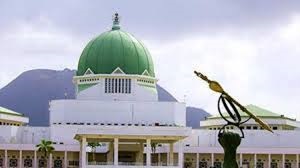
The National Assembly has announced that both the Senate and the House of Representatives will reconvene plenary sessions on Tuesday (tomorrow), February 17, 2026.
The announcement was made by the Clerk to the National Assembly, Mr. Kamoru Ogunlana, on Sunday.
The statement urged lawmakers to take note and adjust their schedules to enable attendance, as crucial decisions are expected to be taken during the sessions.
“I am directed to inform all Distinguished Senators and Honourable Members of the National Assembly that the Senate and House of Representatives shall reconvene Plenary session at 11:00am on Tuesday, 17th February 2026 respectively.
“Consequently, all Distinguished Senators and Honourable Members are kindly requested to take note and reschedule their engagements accordingly to enable them attend the session, as very crucial decisions shall be taken by each Chamber during the session,” the statement read.
The Clerk did not disclose the specific matters to be deliberated.
Lawmakers had earlier suspended plenary to allow more time for the defence of the 2026 budget proposals by Ministries, Departments, and Agencies (MDAs).
Earlier, the House of Representatives had announced it would reconvene on Tuesday for an emergency sitting to consider matters arising from the Electoral Act Amendment Bill, following the release of the 2027 general election timetable by the Independent National Electoral Commission (INEC).
The decision was conveyed to lawmakers in an internal memorandum issued by the Office of the Speaker, according to a statement released on Friday night by the House spokesman, Mr. Akin Rotimi.
The timetable had led to debate over portions that reportedly clash with the Ramadan period, expected to fall between February 7 and 8, 2027.
Following INEC’s release, several Nigerians, including senators, raised concerns about the potential conflict with Ramadan.
Tuesday’s session may consider adjustments to the electoral timetable to ensure that the fasting period does not interfere with scheduled activities.
Similarly, The Independent National Electoral Commission (INEC) has announced that 14 political parties will participate in the Aug. 8 governorship election in Osun.
This is contained in a statement issued by the INEC Public Relations Officer, Mr Musa Olurode, on Sunday in Osogbo.
The News Agency of Nigeria (NAN) reports that among the 14 political parties listed, the Peoples Democratic Party (PDP) and the Labour Party (LP) are conspicuously missing.
Olurode explained that only the 14 political parties that successfully concluded their primaries and uploaded the names and particulars of their candidates within the commission’s stipulated timeframe would participate in the election.
“The submission followed the conclusion of party primaries and the closure of the designated portal for uploading candidates’ particulars,” the statement said.
The qualifying parties are Accord (A), Action Alliance (AA), African Action Congress (AAC), African Democratic Congress (ADC), Action Democratic Party (ADP), All Progressives Grand Alliance (APGA), All Progressives Congress (APC), Allied Peoples Movement (APM), Action Peoples Party (APP), Boot Party (BP), New Nigeria Peoples Party (NNPP), Peoples Redemption Party (PRP), Young Progressives Party (YPP), and Zenith Labour Party (ZLP).
The electoral body said the list was released from its headquarters in Abuja after verifying that all submissions met constitutional and regulatory requirements.
The publication was carried out in accordance with Section 29(3) of the Electoral Act 2022 and Item 4 of the Timetable and Schedule of Activities for the Osun State Governorship Election.
The Commission noted that copies of each candidate’s Form EC9, academic credentials, and other supporting documents will be displayed at its state office and all local government offices.
INEC said the list was released from its headquarters in Abuja after verifying that all submissions met constitutional and regulatory requirements.
The publication was carried out in accordance with Section 29(3) of the Electoral Act 2022 and Item 4 of the Timetable and Schedule of Activities for the Osun State Governorship Election.
The Commission noted that copies of each candidate’s Form EC9, academic credentials, and other supporting documents will be displayed at its state office and all local government offices.
The documents will be available for inspection from Monday, 16 February 2026, at the state office, all 30 local government area offices, and the Area Office in Osun State.
“The Commission hereby notifies political parties and the general public that fourteen political parties have successfully complied with the requirements within the stipulated timeframe,” the statement added.
INEC advised political parties, candidates, and members of the public to inspect the published documents as provided by law and clarified that only the fourteen listed parties are eligible to participate in the forthcoming governorship election, having met the necessary conditions within the prescribed period.
Dr. Agboke reassured stakeholders of the Commission’s commitment to transparency and professionalism.
“The Commission remains firmly committed to the conduct of credible elections in accordance with the law and best democratic practices,” he said.
Meanwhile, The Peoples Democratic Party (PDP) has condemned the FCT Minister Nyesom Wike’s statement, where he allegedly said that the FCT Administration will work against candidates who do not support President Bola Ahmed Tinubu, describing the threat as “unconstitutional and a violation of the constitution, the Electoral Act and Public Service Rules.”
The PDP remarked that Wike’s statement contravenes Section 40 of the 1999 Constitution, which guarantees every Nigerian the right to belong to any political party of their choice.
In a statement issued on Sunday, the PDP also cited Section 42 of the Constitution, which protects citizens from being disadvantaged based on their political opinions, saying Wike’s threat could be seen as an attempt to undermine this right.
The PDP further referenced the Electoral Act 2022, specifically Section 122, which prohibits undue influence, intimidation, or use of force to compel someone to vote or refrain from voting.
The party questioned whether Wike’s statement does not amount to blank intimidation and can be interpreted as using the FCT Administration’s power to obstruct the opponents campaign, saying it could be classified as an electoral offense.
The PDP also cited Public Service Rules, which expected public servants like Wike to remain neutral and avoid actions that bring their office into partisan disrepute.
The party urged Nigerians to reject Wike’s attempt to intimidate voters and called on relevant authorities to take action against him for his statement.
The PDP emphasized that Wike’s threat is a clear attempt to undermine democracy and the rule of law, saying it will not be tolerated.
The statement read in part: “This comment by Wike is not only contrary to the Constitution of the Federal Republic of Nigeria (1999, as amended), but it also violates the Electoral Act (2022) and Public Service Rules.
“Here is why: The 1999 Constitution (As Amended), is the grundnorm of Nigeria, and two sections are particularly relevant here, namely Section 40 (Freedom of Association): Every Nigerian has the right to belong to any political party of their choice. Critics argue that a Minister using his office to “work against” those who do not support a specific leader is an attempt to undermine this fundamental right.
“Section 42 (Right to Freedom from Discrimination): This protects citizens from being disadvantaged based on their political opinions.
If Wike’s “working against” involves using state resources or official FCT powers to sideline candidates, it could be challenged as a violation of this section.
“The Electoral Act is specific about behavior during an election cycle: Section 122 (Undue Influence/Intimidation): The Act prohibits any person from using “force, violence, or restraint,” or inflicting “temporal or spiritual injury” to compel someone to vote or refrain from voting.
“The Gray Area: If “working against” is interpreted as political campaigning, it is legal. However, if it is interpreted as intimidation or using the FCT Administration’s power to obstruct an opponent’s campaign, it could be classified as an electoral offense.
“Section 92 (Prohibition of Certain Conduct at Campaigns): Rallies and speeches must not be used to incite others or use language that could lead to a breach of peace.
“Public Service Rules. As a Minister, Nyesom Wike is a public servant. Under Nigeria’s Public Service Rules (PSR), officials are generally expected to remain neutral in the discharge of their duties and avoid actions that bring their office into partisan disrepute.
While Nigerian ministers often take active roles in party campaigns in practice, using the authority of a public office to target political opponents remains a breach of administrative ethics.”
