

.As Telcos, NBS biker over N2.13trn CapEx
The Federal Government has processed payments exceeding N700bn in verified obligations owed to local contractors over the past few months, including N436.6bn disbursed in May alone, as part of efforts to clear long-standing debts and boost economic activity.
The Federal Ministry of Finance disclosed this in a statement issued on Monday by its Director of Information and Public Relations, Efe Ovuakporie, noting that payments had also been approved for more than 1,240 contractors across various Ministries, Departments and Agencies.
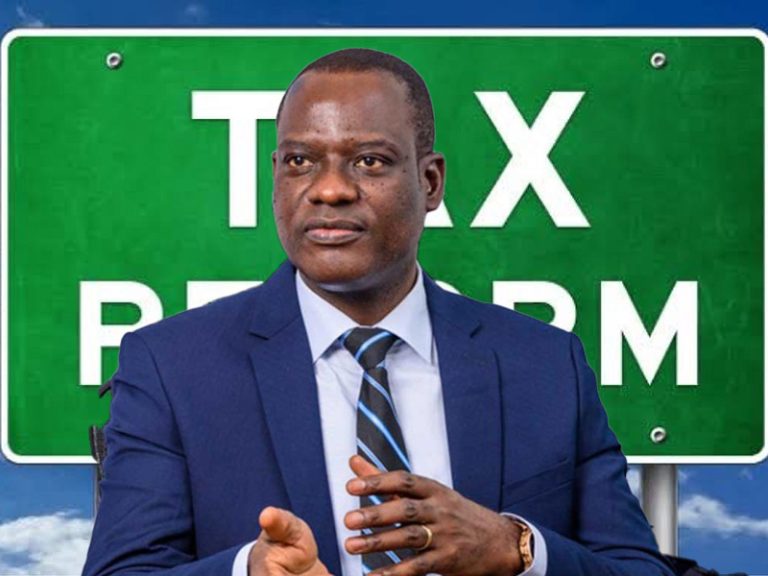
According to the ministry, the approvals were granted by the Minister of Finance and Coordinating Minister of the Economy, Taiwo Oyedele, following a verification and reconciliation exercise to ensure that only duly validated claims qualified for payment.
The ministry said the latest disbursements represented a major step towards addressing inherited payment obligations, particularly those affecting indigenous businesses and small and medium-sized enterprises.
It stated, “The Federal Ministry of Finance has approved payments to more than 1,240 contractors, providing immediate liquidity support to businesses across the country and reinforcing the Federal Government’s commitment to meeting its financial obligations.”
The statement explained that contractors with verified claims of N100m or less were prioritised in the latest batch of payments.
According to the ministry, the release of funds is expected to provide immediate relief to hundreds of businesses by enabling them to return to project sites, pay workers, settle suppliers and meet other financial obligations.
“Contractors prioritised for payment in the most recent batch are those with verified claims in the region of N100m or less. The release of funds is expected to provide immediate relief to hundreds of businesses, enabling them to return to project sites, pay workers, settle suppliers, meet financial commitments, and support economic activity across the country,” the statement added.
The ministry described the development as part of the government’s commitment to resolving inherited liabilities in a transparent and fiscally responsible manner while translating policy objectives into tangible outcomes.
It further disclosed that payment activities had accelerated significantly in recent months, with approximately N436.6bn in transactions processed in May.
“Over the past few months, the Federal Government has processed payments exceeding N700bn across various categories of verified obligations owed to local contractors. Within the month of May alone, approximately N436.6bn in transactions were processed, demonstrating a significant acceleration in payment activity aimed at unlocking liquidity and supporting economic growth,” the ministry stated.
The ministry noted that by prioritising a large number of smaller contractors rather than concentrating payments among a few major beneficiaries, the government was broadening the economic impact of the disbursements across sectors and regions.
It added that the latest payments would strengthen confidence among contractors, suppliers and service providers doing business with the government, while helping beneficiaries sustain operations, preserve jobs and complete ongoing projects.
The ministry reaffirmed its commitment to fiscal discipline and the timely settlement of legitimate obligations, saying the approach would help reduce outstanding liabilities, strengthen confidence in public financial management and support the delivery of public services and infrastructure.
Meanwhile, Nigerian telecom operators have pushed back against the capital importation data released by the National Bureau of Statistics, NBS, arguing that the figures do not fully reflect the scale of spending in the sector, which recorded N2.13tn in capital expenditure in 2025.
The country’s statistics agency on Friday released first-quarter 2026 data showing that foreign investment in the telecom sector fell 91 per cent to $7.24m from $80.78m in 2025.
In a statement issued on Monday and signed by the Association of Licensed Telecommunications Operators of Nigeria Chairman, Gbenga Adebayo, and Publicity Secretary, Damian Udeh, the group said it welcomed the NBS report but stressed that the data needed broader context to properly reflect sector dynamics.
“While we recognise the importance of accurate data in shaping investor perceptions and guiding policy decisions, we believe that additional context regarding the telecommunications sector’s current investment landscape will provide stakeholders with a more comprehensive understanding of the industry’s health and trajectory,” ALTON stated.
Operators argued that although the NBS report shows a decline in foreign capital importation from $80.78m in 2025 to $7.24m In Q1 2026, the figures capture only a portion of total capital deployed in the sector.
They said the industry’s capital expenditure profile suggests investment is increasingly being driven by domestic capital sources and reinvested earnings, financial mechanisms that may not be fully captured in traditional capital importation data.
“The sector’s recovery is reflected in sustained capital deployment. In 2025, mobile network operators, tower companies, and other players in the sector recorded a total capital expenditure of N2.13tn, with a planned capital expenditure of N1.86tn for 2026, directed towards network infrastructure expansion,” the association said.
According to ALTON, the investment momentum reflects the impact of policy support measures, including a 50 per cent tariff increase approved in 2025 by the federal government.
Telcos had initially demanded a 100 per cent tariff increase in 2024-2025 because the telecom sector was near collapse due to operating costs rising 300 per cent from naira depreciation and the 11-year tariff freeze that cost them $11.3bn in lost revenue.
Eventually, a 50 per cent tariff hike was approved on January 20, 2025, the first increase since 2013, raising call rates from ₦11 to N15.40, SMS from N4 to N6, and 1GB data from N1,000 to N1,400, which was implemented on February 11, 2025.
ALTON said the tariff adjustment played a pivotal role in stabilising the telecoms sector, addressing critical revenue sustainability gaps, and restoring operational viability during a particularly challenging period.
It added that operators have since moved from financial distress toward a more sustainable investment cycle, with continued capital deployment into network infrastructure.
The group warned that the gap between official foreign inflows and actual sector spending highlights limitations in how telecom investment is currently measured.
“This disparity between reported foreign capital inflows and actual infrastructure investment highlights a gap in how sectoral capital deployment is currently measured and reported,” ALTON said.
It called for a joint framework involving the Nigerian Communications Commission, the National Bureau of Statistics, and the Central Bank of Nigeria to improve tracking of telecom investment flows.
ALTON said a more comprehensive system would improve investor confidence and better reflect the sector’s contribution to Nigeria’s digital economy.
