

NCDMB declares midstream, downstream petroleum industry’s economic growth frontier
SOPURUCHI ONWUKA, Editor
Federal Government has declared that Nigeria’s midstream and downstream petroleum industry now represents the next major frontier for sustainable economic growth, industrial expansion, employment generation, and national competitiveness.
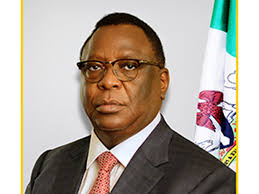
The declaration was made on Tuesday at the 2026 Nigerian Oil and Gas Midstream and Downstream Summit in Lagos by the Executive Secretary of the Nigeria Content Development and Monitoring Board (NCDMB), Engr Felix Ogbe, who said ongoing reforms in the petroleum industry were repositioning the nation’s economy for long-term growth and development.
In a presentation delivered for him at the event, Ogbe stated that the current administration’s policy reforms have restored investor confidence, improved competitiveness, unlocked dormant opportunities, and created a more enabling environment for businesses across the energy sector.
According to him, the reforms are already yielding positive outcomes throughout the oil and gas value chain and are helping to reposition Nigeria as one of Africa’s most attractive destinations for oil and gas investments.
He reaffirmed the commitment of the NCDMB to deepen Nigerian Content implementation across the upstream, midstream, and downstream sectors of the industry.
“The next major frontier for sustainable economic growth, industrial expansion, employment generation, and national competitiveness lies significantly within the midstream and downstream sectors of the oil and gas industry,” Ogbe said.
He noted that the Board, established under the Nigerian Oil and Gas Industry Content Development (NOGICD) Act of 2010, remains committed to increasing indigenous participation, developing in-country capacity, promoting technology transfer, creating employment opportunities, and ensuring that Nigeria derives greater economic value from its hydrocarbon resources.
Highlighting progress in the upstream sector, Ogbe said Nigerian companies had become major contributors to complex projects involving exploration, drilling, engineering, fabrication, marine operations, and project management.
He added that significant opportunities were now emerging in the midstream sector, particularly in gas gathering, gas processing, compression, transportation, pipelines, storage infrastructure, LPG and CNG distribution, and related industrial infrastructure.
“As Nigeria continues to deepen its gas-based industrialization agenda, the midstream sector presents enormous opportunities for investment, technology deployment, local manufacturing, and capacity development,” he stated.
In the downstream segment, he identified refining, product distribution, depot infrastructure, petrochemicals, logistics, lubricants, and retail operations as key growth areas capable of driving employment creation and supporting local enterprise development.
Ogbe said Nigeria’s long-standing dependence on imported refined petroleum products was gradually changing due to bold government reforms, improved regulatory clarity, and increased private sector participation.
He described the Dangote Refinery as one of the most significant symbols of Nigeria’s industrial ambition and self-sufficiency, noting that the facility ranks among the largest single-train refineries in the world.
He also pointed to growing investments in modular refineries, gas commercialization projects, LPG penetration, compressed natural gas deployment, petrochemical expansion, fertilizer production, and other industrial developments aimed at adding value beyond crude oil exports.
Projects such as the Nigeria LNG Limited Train 7 expansion, gas infrastructure projects, and the Federal Government’s Presidential Initiative on CNG, he said, demonstrate Nigeria’s increasing capacity to process and export finished and semi-finished energy products.
Engr Ogbe emphasized that while compliance with Nigerian Content regulations remains central to the Board’s mandate, implementation must also support business growth, encourage investment, create value, and remain practical for operators.
“This summit is not just another industry gathering. It is a strategic engagement designed to bring together policymakers, regulators, operators, investors, financiers, contractors, service providers, manufacturers, and technology providers to chart a sustainable path for Nigerian Content development within the midstream and downstream sectors,” he said.
Earlier in his remarks, the Director of Monitoring and Evaluation at the NCDMB, Esueme Dan Kikile, said the summit came at a critical time in Nigeria’s energy transition and industrial development journey.
He noted that the theme of the summit, “Unlocking, Growing & Sustaining Nigerian Content Development in Nigeria’s Oil & Gas Midstream and Downstream Sectors,” reflects the industry’s collective commitment to strengthening indigenous participation, encouraging investment, and promoting sustainable economic growth.
Dan Kikile said the two-day event would provide a platform for regulators, operators, investors, service providers, financial institutions, and policymakers to develop practical solutions and strategic collaborations capable of enhancing the growth and competitiveness of local capacity in the Nigerian oil and gas industry.
He reiterated the Board’s commitment to policies and programs aimed at promoting value retention within Nigeria, strengthening local manufacturing and service capabilities, creating jobs, and deepening strategic partnerships across the energy value chain.
