

. urged industry players to move beyond extraction to value building
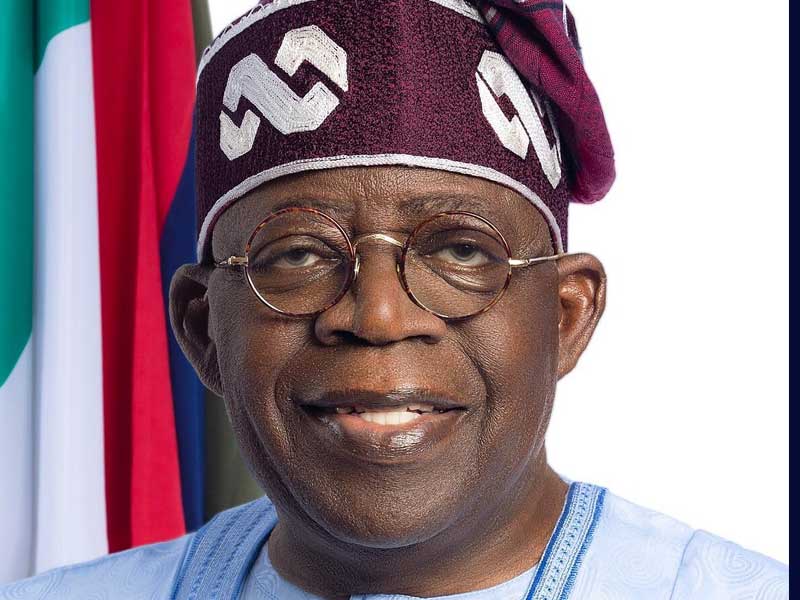
President Bola Ahmed Tinubu says Nigeria is transforming its petroleum industry from import dependence to one driven by domestic refining, private investment and regional competitiveness, as reforms under the Petroleum Industry Act begin to yield results.
The President stated this in an address delivered on his behalf by the Permanent Secretary, Federal Ministry of Petroleum Resources, Mrs. Patience N. Oyekunle, at the 20th anniversary edition of the OTL Africa Downstream Energy Week in Lagos.
Commending OTL Africa for sustaining a platform that brings government, investors, operators and regulators together for 20 years, Tinubu said this year’s edition comes at a critical moment in Nigeria’s economic journey.
He disclosed that Nigeria’s crude production averaged about 1.50 million barrels per day and 1.82 million bpd including condensates in October 2026, maintaining compliance with OPEC quota for the fourth consecutive month — progress he attributed to regulatory predictability, operational efficiency and investor confidence.
“But increasing production is only one part of the equation. What we do with our resources is equally important,” the President said, noting that for too long Nigeria exported crude and imported products.
He said the emergence of large-scale private refining capacity marks a turning point, with the Dangote Refinery attaining its 650,000 bpd nameplate capacity, strengthening Nigeria’s prospects of becoming a net exporter of refined products.
At the same time, government is pursuing a more rigorous, commercially sustainable approach to rehabilitating national refineries to prevent them from becoming stranded assets, backed by technical assessment and stronger partnerships.
Tinubu stressed that the future of the industry is inseparable from gas, with over 215 trillion cubic feet of proven reserves. He cited the Gas Master Plan 2026 which targets 10 billion standard cubic feet per day by 2027 and 12 Bscf/d by 2030, to power industries, electricity, CNG/LPG expansion, LNG exports and petrochemicals.
He also pointed to improved domestic crude supply to local refineries in Q2 2026, reflecting stronger implementation of the Domestic Crude Supply Obligation.
To investors, the President said “Nigeria is open for business,” referencing the 2026 licensing round offering 40 blocks across onshore, shallow and deep water to attract competent investors.
He urged industry players to move beyond extraction to value building, with greater investment in local content, technology, infrastructure and host-community development, adding that Nigeria’s ambition is to become a major energy hub supplying refined products, gas and petrochemicals to Africa.”Nigeria must refine more of its crude, create more value domestically and become a reliable supplier of energy to Africa,” Tinubu said.
