

… says Nigeria’s oil & gas talent export is a strategy, not leakage
…. identifies AI, cybersecurity, carbon management as next must-have skills
CHIGOZIE AMADI
Rt. Hon. Ekperikpe Ekpo, Minister of State for Petroleum Resources (Gas), has called on professional trainers to place human capital development at the centre of Nigeria’s Decade of Gas initiative, warning that the infrastructure ambitions driving the country’s gas expansion cannot be realised without a parallel investment in the people who will build and run it.
The Minister made this known in his keynote address presented at the Oil and Gas Trainers Association of Nigeria (OGTAN) Human Capacity Development Conference 2026, themed “Empowering People. Driving Performance. Shaping the Future of Oil & Gas,” on Thursday, being part of day three(3) proceedings of the conference in Warri, Delta State.
Ekpo who was represented by Chief Geologist/Technical Assistant to Director, Gas Department, Ministry of Petroleum Resources, described the OGTAN conference theme as one that “aligns with the Federal Government’s determination, under the leadership of President Bola Tinubu, to reposition Nigeria’s energy sector as a catalyst for industrialisation, investment, job creation and sustainable economic growth.”
He argued that Nigeria’s vast oil and gas endowment alone cannot guarantee prosperity, stressing that “it is people who transform natural resources into national prosperity.”
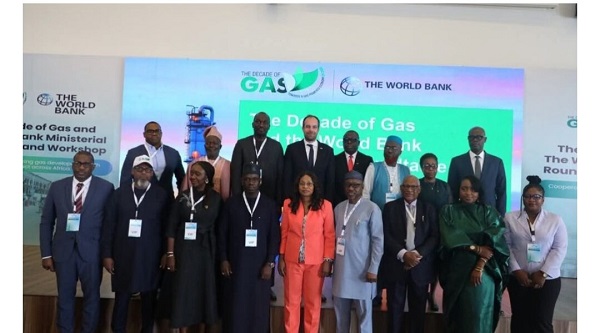
Speaking on the Decade of Gas (2021–2030), the Minister described it as more than a policy initiative, calling it “a national development strategy that recognises natural gas as a critical enabler of Nigeria’s industrial and economic transformation.”
He said government’s ambition spans deepening domestic gas utilisation, improving power generation, expanding cleaner cooking and transport fuels, and strengthening Nigeria’s position in regional and global energy markets.
However, he cautioned that infrastructure investment alone will not deliver on this ambition.
As Nigeria expands gas processing facilities, pipelines, LNG and CNG infrastructure, LPG distribution networks and petrochemical plants, he said, “we must simultaneously develop the people who will design, finance, construct, operate and maintain these assets.”
“Infrastructure creates opportunity, but human capacity converts opportunity into sustainable value. Human Capacity Development must therefore remain at the centre of the Decade of Gas and Nigeria’s broader energy transformation.”
The Minister said the pace of change in the global energy sector — driven by artificial intelligence, automation, digital twins, data analytics and rising cybersecurity demands — means the skills that have carried Nigeria’s oil and gas sector this far “will not, by themselves, take us into the future.”
He called for a workforce equipped not only in traditional technical disciplines, but also in AI, digital technologies, automation, cybersecurity, gas commercialisation, carbon and emissions management, project finance, contract negotiation and energy economics, alongside soft skills such as critical thinking, adaptability and communication.
He also urged a shift in how training itself is measured, arguing that capacity development should not be reduced to attendance figures or certificates issued.
“The true measure of training is not the number of courses attended or certificates issued. It is the measurable improvement in competence, productivity, safety, operational efficiency, innovation and organisational performance.”
Ekpo credited Nigeria’s progress in building indigenous capacity to the implementation of the Nigerian Oil and Gas Industry Content Development (NOGICD) Act 2010, specifically acknowledging the Nigerian Content Development and Monitoring Board (NCDMB) for its role in advancing indigenous participation, skills development and technology transfer across the industry.
He noted that Nigerian professionals and indigenous companies are increasingly taking on more complex roles across the upstream, midstream and downstream segments of the industry.
Sustaining that momentum, he argued, will require deeper collaboration — government, industry, academia and training bodies such as OGTAN working in concert, rather than in isolation.
He called on universities to produce more industry-ready graduates, urged industry to expand internships, apprenticeships and mentorship opportunities, and pressed training providers to keep programmes aligned with actual industry demand.
He also called for greater inclusion of young Nigerians and women across technical, commercial and leadership roles in the sector.
The Minister reaffirmed that the Ministry of Petroleum Resources (Gas) remains committed to supporting a globally competitive petroleum workforce, through continued industry-academia collaboration, technical and vocational education, professional certification, research, technology transfer, and the establishment of centres of excellence.
He argued that the country’s workforce strategy should extend past meeting domestic needs alone.
He said, “Nigeria should not only export energy resources. We must increasingly position ourselves to export energy expertise, technology, innovation and professional services.”
He described OGTAN as having “an important responsibility to continue evolving as a strategic human-capital development partner for Nigeria’s energy transformation,” tasked with anticipating future skills needs and preparing Nigerian professionals to compete globally.
