

*US launches new strikes on Iran after helicopter downed
*Tehran threatens to resume hostilities if Israel attacks Hezbollah
*US crude inventories fall for eighth week, raising supply concerns
Oil prices were steady on Wednesday, as renewed U.S.-Iran hostilities muddied direction, though a forecast U.S. stock draw offered support.
Reuters reported that Brent futures were up 25 cents, or 0.27%, to $91.70 a barrel at 0736 GMT, while U.S. West Texas Intermediate crude was up 23 cents, or 0.26%, to $88.43 a barrel.
Prices traded higher earlier on renewed strikes between the U.S. and Iran, before retreating towards the previous session’s close.
Global stock draws are underpinning prices, but lower Chinese crude oil imports are helping to keep a ceiling on prices, as is a limited flow of shipping through the Strait of Hormuz, PVM analyst Tamas Varga said.
“Nonetheless, it is difficult to reconcile the current lack of anxiety with the perpetual conflict engulfing the world’s most pivotal oil-producing region,” he added.
The U.S. military struck Iranian targets after President Donald Trump vowed on Tuesday to respond to the downing of a U.S. Apache attack helicopter.
The latest attacks shifted traders’ focus back towards war risks and potential supply disruptions, said Priyanka Sachdeva, senior market analyst at Phillip Nova.
“While diplomatic efforts remain ongoing, the latest military exchanges have reintroduced a geopolitical risk premium into oil markets,” Sachdeva said.
Tehran said it would resume hostilities if Israel continued to attack the Hezbollah militia in Lebanon. Israel’s refusal to end its campaign against Iran-backed Hezbollah has hindered Trump’s efforts to extend a tenuous ceasefire in the wider U.S.-Israeli war with Iran into a durable settlement.
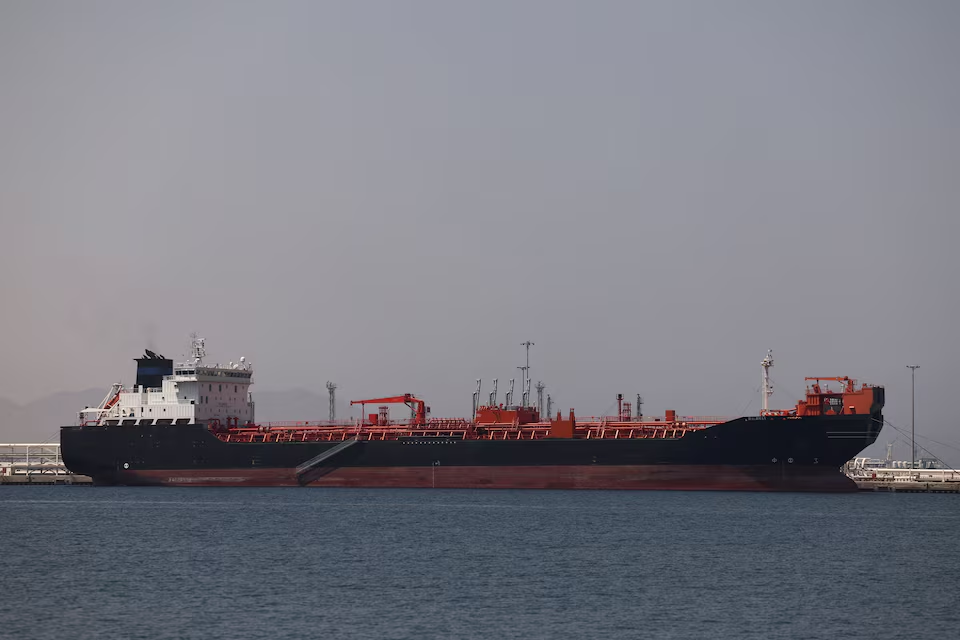
Iran has continued to block most shipping through the Strait of Hormuz, which normally carries a fifth of the world’s crude oil and liquefied natural gas. Washington has imposed its own blockade of Iranian ports.
U.S. Energy Secretary said on Tuesday that ship traffic in the Gulf and oil exports through the Strait of Hormuz are rising even as Washington and Tehran struggle to reach a deal on ending their more than three-month-old war.
Meanwhile, U.S. crude oil inventories fell last week for an eighth consecutive week, according to market sources citing data from the American Petroleum Institute released on Tuesday, while gasoline stocks also declined.
